
EINHERJER – interview
- Posted on 06-06-2026
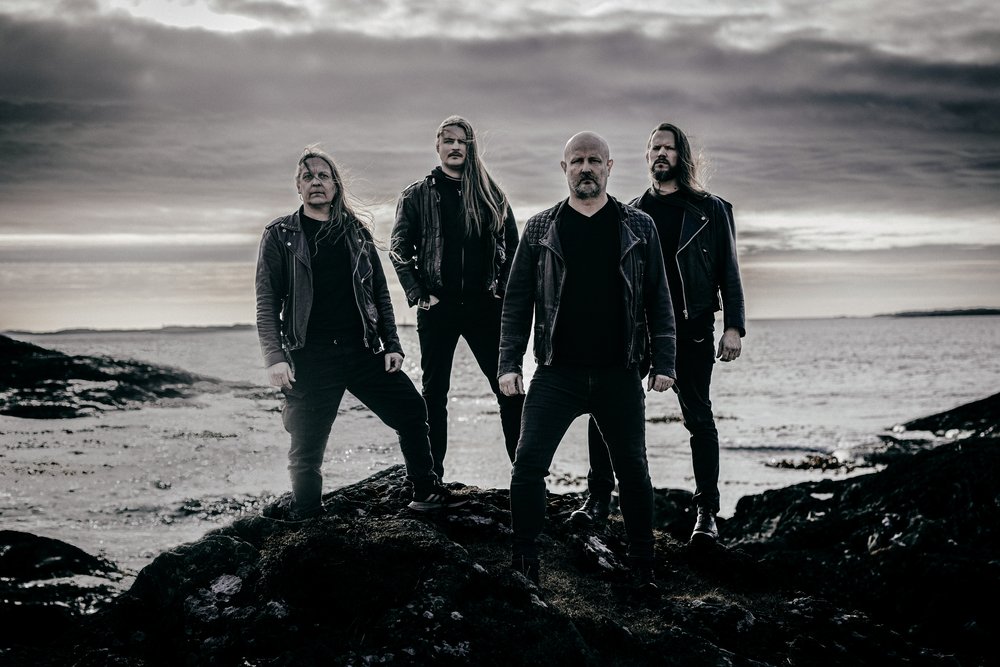
Norwegian metal pioneers EINHERJER are soon to release their newest album ‘Lifeblood’, set to be out worldwide on the 19th of June, via By Norse Music. Prior to this release, we got the chance to conduct a chat with Gerhard, prying a bit into what the album brings and gathering some of the insights from the creation process. Below you can read the result of the chat and enjoy again their single “Bloodborn”
What can fans expect from your upcoming album in terms of sound and themes?
I think fans can expect an album that feels and sounds like Einherjer, but maybe a bit more focused and confident. Musically, it combines the epic, melodic, and aggressive elements that have always been part of our sound, while allowing room for atmosphere and dynamics. That being said, we follow in the path set by our previous albums. Same same, but different. Maybe a bit more emphasis on that big, bombastic sound than earlier. Thematically, Lifeblood revolves around ideas of heritage, memory, identity, and what connects us across generations. A lot of the inspiration comes from the landscape and history of the west coast of Norway, but the themes are universal. It’s an album about what shapes us and what endures. That also means us as people, as well as a band.
What do you think this new release brings up compared to your previous work?
I think the new album feels like the culmination of many different phases of the band’s journey. We’ve never been interested in repeating ourselves, but we’ve also never felt the need to chase trends or change direction radically. This album brings together many of the qualities we’ve developed over the years and presents them in a more distilled form. We focus on the songs. We want to give all of them an identity, rather than trying to squeeze them into some kind of formula.
Were there any new experiments you tried while recording it?
Nothing revolutionary in terms of technology or production tricks. For the most part, we tend to approach experimentation through our songwriting rather than novelty for its own sake. We set a pretty rough deadline for ourselves to get this album out, so we had limited time to just try out stuff in the studio. We pretty much knew what each of the songs needed anyway, with a couple of exceptions. And sometimes restraint can be just as experimental as adding something new. In contrary to what some people say, less can actually be more. Not always, but sometimes.
Is there a central concept or story behind the album?
Not a traditional concept album with a narrative or storyline, but there is definitely a common thread running through it. Lifeblood is about continuity. The idea that we are not isolated individuals but part of something larger. Connected to place, ancestry, memory, nature, and time. The past is never just something that lies behind us. It lives within us and shapes who we are.
Which track are you personally most excited for fans to hear, and why?
For me, it’s probably “Dei Så Ser.” The origins of that song go back more than twenty years, which makes it pretty unique within the context of this album. Some ideas seem to arrive fully formed, while others need time to mature, and this song definitely belongs in the latter category. Bringing it to life wasn’t straightforward. It took a lot of work in the studio to find the right balance and make it become what we felt it could be. We were pretty much operating in slightly unfamiliar territory, which made the process both challenging and rewarding. What makes it special to me is that it feels very connected to the themes of Lifeblood. It’s a song about continuity, memory, and the connection between past and present, and the fact that the song itself has been with us for more than two decades somehow reinforces those ideas. It has been on our “list” several times before, but this time everything finally fell into place.
You have recorded albums for a while now and have seen the evolution of the process. Do you find it easier to have a final album ready in 2026 compared to when you started?
Technically, absolutely. The tools available today are pretty convenient compared to what we had in the 90’s. Recording, editing, and exchanging ideas can all happen a lot faster and easyer than before. We don’t have the time, opportunity nor the energy(we’re old) to travel to some distant location for weeks on end anymore to record an entire album in one go. At the same time, that doesn’t necessarily make finishing an album easier. In some ways it creates new challenges. Sometimes the hardest part is deciding when to stop refining something and simply let it go.
And what parts of this recording evolution have affected your sound in your opinion? Both studio wise but also in the way you compose/write/arrange songs?
The biggest change is probably that modern recording allows us to hear ideas much closer to their final form during the writing process. In the early days you often had to imagine how something would sound. Today you can build detailed arrangements as you write. As a drummer, I can sit at home and create a pretty decent pre-production/demo over a few beers. I got all the tools I need right here. That is why most experimentation on the songs usually happens long before we set foot in the studio. At the same time, we still try to judge every song by a simple standard: does it work at its core? It needs to be a good song at the basic level.
If you look back to the beginning of the band, what were some of the biggest challenges you faced in your early years and you no longer have to worry about now?
Simply being heard. In the early days information moved slowly, recordings were expensive, and reaching an international audience was difficult. Today it’s possible to communicate directly with people all over the world. I mean, we sent cassettes by post back in the day. We got flyers back. That’s how we discovered stuff. Charming, and I miss it just a tiny bit to be honest. The challenge now is almost the opposite. There is so much music available that standing out can be difficult. It’s easy to drown in the masses. Every era comes with its own obstacles.
How do you think that the Norwegian metal scene influenced your identity and direction? Were there any defining moments that shaped Einherjer into what it is today?
Growing up in Norway during that period naturally had a huge influence on us. There was a sense that people were creating something unique and culturally rooted. At the same time, we never felt like we completely belonged to any particular “movement”. From the beginning we wanted to explore our own path. We kind of branched out. Listening to “Twilight of the Gods” for the first time…well, it helped. We never felt that we needed to fit into somebody else’s idea of what Norwegian metal should sound like. Both me and Frode grew up with classic Heavy Metal, and in the early 90’s we got “devoured” by the Black Metal wave. Both of those instincts/inspirations follow us to this day, and has formed and molded Einherjer into what it is today.
How do you reflect on your hiatus in the mid-2000s and the decision to reunite?
With the benefit of hindsight, the hiatus was probably healthy for us at the time. I actually like the word hiatus. It sounds a lot more dignified than the reality of the situation. At the time, we were, as someone across the pond would say, up shit creek without a paddle. All we had was Jack shit, and Jack had just left town. In simpler terms, we needed a break. We’d been going on for a long time and had reached a point where we needed some distance from the band and from everything surrounding it. There wasn’t any major drama behind it, we just felt a bit like “butter spread over too much bread.” The reunion happened in a very natural way. Frode and I took a walk in the woods and started talking about the possibility of bringing Einherjer back. The more we talked, the more it became clear that the motivation was genuinely there again. It wasn’t about nostalgia or obligation. We simply felt there was more music. We had unfinished business. That being said, I don’t regret one single moment we had with Battered during that “break”. Good times.
Does it feel like you continued where you left off or everyone seemed to have gone in a new direction so it was somehow like starting from scratch?
It was definitely more challenging than simply picking up where we left off. We quickly discovered that a reunion doesn’t automatically mean everything falls back into place right away. We actually spent some time revisiting old material and unfinished ideas from before the “hiatus”, thinking that might be the natural place to start. But for whatever reason, very little of it clicked. It felt like we were trying to force something that belonged to a different time. In many ways it felt like starting over, but with the advantage of experience. We had to rediscover what Einherjer was and what it could be going forward. Once we stopped trying to recreate the past and focused on creating something new from the same foundation, things began to fall into place.
How can a band maintain authenticity in a genre so rooted in tradition?
By being honest. We’re a metal band. We happen to draw a lot of inspiration from history, mythology, and the landscape we grew up in, but we’ve never felt the need to play a role or follow a formula. We’re not academics. The way I see it, those elements form an epic backdrop. A tapestry that gives the music depth and character. But the heart of it is still a group of people writing and playing the kind of metal they want to hear. That’s probably the closest thing we have to authenticity.
What do you still find inspiring after so many albums when it comes to lyrics?
The human experience and condition really. History, mythology, nature, memory, mortality, belonging. These are subjects that never stop being relevant because every generation experiences them in its own way. The details change, our world changes, but the underlying questions remain the same. I think we are past just Norse Mythology and history at this point. Inclusive, but not limited to.
How deeply do you research Norse mythology and history for your music?
Research is definitely important, but we’re not historians writing academic papers. We want to understand the material well enough to use it creatively and meaningfully. That said, on Lifeblood there isn’t a single song that is directly about Norse mythology. The album is much more concerned with themes like identity, memory, heritage, place, and the passage of time. As I said earlier, vikings included, but not limited to. Those are the ideas at the heart of the songs. What Norse mythology and history can give us, is a language for expressing those themes. Sometimes that means using certain names, symbols or imagery that feel rooted in a Norse worldview. In that sense, mythology becomes part of the atmosphere and storytelling rather than the actual subject.
Are there any non-metal influences that have shaped your recent material?
Absolutely. A lot of the inspiration comes from things that have nothing to do with music at all. History, landscape, local stories, and simply spending time outdoors all play a role. Living on the west coast of Norway, the sea is a constant presence. The coast, the weather, the light, the harshness of it all. Many of my ideas on Lifeblood came from spending time by the sea or sitting in the woods by a fire with a cup of coffee, reflecting on well….stuff. For me to get any lyrics done these days, I simply need to leave the house. Too many distractions there. I tend to focus a lot better, if I get the hell outside, and put my phone on flight mode. Go figure. I often find myself wondering who else stood here centuries ago, looking at the same horizon or walking the same paths. I mean, countless generations have been clinging to these rocks. That connection between people, place, and time is a recurring theme throughout the album.
How do you find the balance between aggression and melody in your compositions?
That balance has always been an important part of Einherjer. Quite often, Frode brings the aggression. He’s the riff meister in the band and has a real talent for coming up with strong, powerful guitar ideas. As a drummer, I have my limitations on guitar, so my strengths are probably more on the melodic side, as well as arrangements and shaping the overall flow of a song. We work well together, and have an understanding of what works and what doesn’t. Of course, it’s not always that simple, but that dynamic has been part of the band for a long time. One idea pushes in one direction, another pulls in a different direction, and somewhere in the middle the song finds its identity.
Can you tell us about your typical songwriting process as a band?
Frode and I actually write most of our material independently and then present ideas to each other. That’s been our way of working for a long time. For my part, songwriting usually starts with an idea that gets stuck in my head. It might be a melody, an atmosphere, or just a feeling I can’t get rid of. Then comes what I call the grinding phase. I’ll carry the idea in my head for weeks or months, thinking about it while driving, walking, working, or just going about my day. The most random moments. During that time the song slowly evolves. New melodies appear, arrangements take shape, and eventually I start to get a clearer picture of what the finished piece could become. By the time I sit down and start recording demos, a lot of the work has already happened mentally. The song Malstrøm is a perfect example of this. On and off in my head, for at least a couple of years. Frode’s process is his own, but once we start sharing ideas and working on them together, that’s where the songs really begin to find their final form. Sometimes things fall into place immediately, and sometimes they need a bit more wrestling before they become what they’re meant to be.
When it comes to live performances, how do you translate your studio sound into a live setting?
The goal is never to recreate the album note for note. Live performance is a different experience. We focus on preserving the energy, atmosphere, and impact of the songs. Some details change, but the essence should be the same. Like many bands, we use some backing tracks to support some atmospheric elements, because we simply can’t afford dragging 75+ classically trained musicians around Europe.The foundation should always be the band on stage. At the end of the day, a live show is about connection and energy rather than perfect reproduction. If the audience walks away happy, then we’ve done our job.
What does the future hold for Einherjer after this album release, are there many unannounced shows at this moment?
Right now our focus is on getting Lifeblood spread around like the plague and bringing these songs to the stage. The next big stop for us is Hellfest, and after that we have festivals like Wacken and shows with our friends in Midgardsblot and Månegarm, among others. We don’t play a massive amount of gigs, but the ones we do mean a lot to us. It’s still a bit surreal sometimes. We’re basically a bunch of guys from a small corner of the west coast Norway, and every now and then we find ourselves standing on a stage in front of more people than there are in our hometown. Sometimes I feel a bit like Crocodile Dundee arriving in New York…without the knife.
How has the collaboration with ByNorse impacted how you present your music and participate in the live scene?
Well, we haven’t been working together for very long, so it’s probably still early to fully answer that question. But one thing that has been clear from the start is that they seem to understand who we are and what we do. There has been a shared understanding of the band’s identity and vision, which is important to us. We’ve never been interested in chasing trends or trying to be something we’re not. So far, ByNorse has respected that while helping us present our music to their audience. At the end of the day, that’s really all you can ask for from a collaboration: working with people who understand what you’re trying to achieve. And in return, we’ll do our best not to make them regret it. There. A proper diplomatic answer.
Comments