
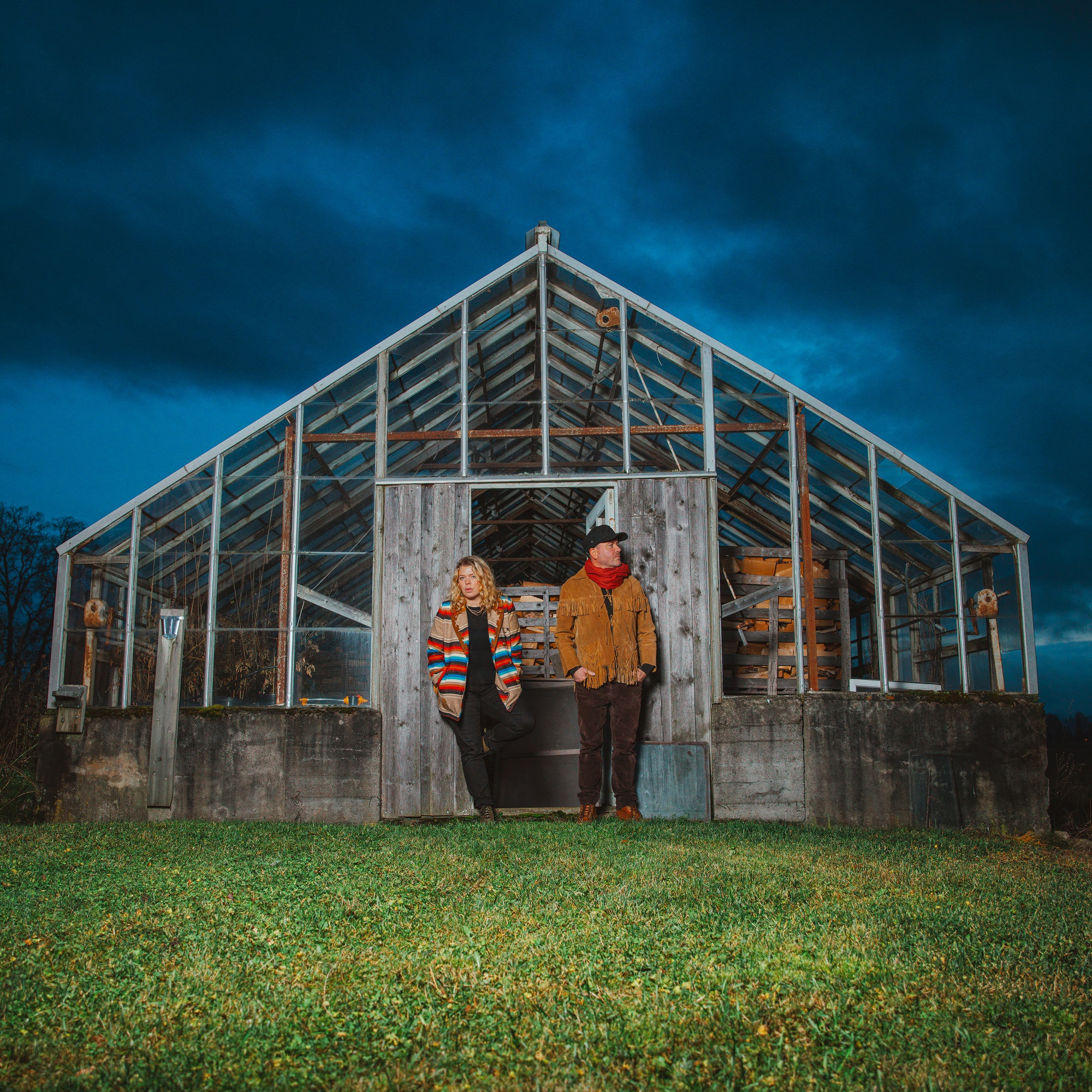
MUSICAL LETTERS TO A FUTURE NOSTALGIA — AN INTERVIEW WITH PAPER CROWN
- Posted on 11-05-2026
PHOTOGRAPHER: Jonas Tomter
Photos copyrights belong to the photographer. No unauthorized usage allowed. Please contact photographer if you wish to reuse images in any context
One of the most wonderful (and wonderfully evocative) albums to have seen the light of day this year is the deeply moving and exquisitely crafted Letters by the Norwegian constellation named Paper Crown, which is the brainchild of the highly talented Johanne Kippersund (vocals) and Ørnulv Snortheim (guitar, bass, keyboards, backing vocals, sarangi, sarod). Somewhere between Americana, art pop, singer-songwriter, folk rock, and arguably also indie rock is where this marvelous act exists and yet that description only gets us halfway there. The fact of the matter is that Paper Crown possess a sound and musical identity of their own and that their moving compositions tug at the heartstrings like no other. We simply had to have a chat with the aforementioned duo to learn more about Letters and the group itself. The brilliant thing is that while they replied to each question collectively, they also replied to many of them individually, which made for one of the most interesting talks that this scribe has enjoyed lately.
Greetings, and many thanks for taking time out of your busy day to talk to us today. First of all, congratulations on having released one of the most evocative and outright beautiful records of the year. I hope you are as thrilled with it as we, the fans and listeners, are.
PC: Thank you so much — that’s incredibly heartwarming to hear. We’re very happy with the album ourselves and hope that even more people will discover it. It means a lot to us that it communicates and resonates the way we hoped when we made it. So truly, thank you.
What was the initial motivation for launching Paper Crown and how and where did you guys meet? And when did you decide to join forces, creatively speaking? What were the first few songwriting and recording sessions like and what were your impressions of those?
PC: We met around ten years ago when we had both just moved back to Hamar after spending some time in Oslo. We actually became neighbors, and the first time we met was in Ørnulv’s studio to record a children’s song. I (Johanne – ed. note) remember being immediately impressed both by the studio and by the way Ørnulv worked. It was clear that we had a good connection.
Not long after that, we started playing together in different local projects, and pretty quickly we felt like trying to write our own music. We realized that we shared a sense of dynamics and arrangement, and things really clicked once we stopped thinking about what we should make and instead focused on making the kind of music we actually wanted to hear ourselves. We started sketching ideas around 2017–2018, and now here we are, three albums later. It’s been an incredibly fun and very formative journey. We’ve always been good at following through on our ideas and plans, and the very first song we wrote together actually ended up on our debut album. We do everything ourselves — writing, producing, mixing, mastering, visuals, booking — and it’s a completely shared 50/50 project.
Johanne: I remember being quite nervous the first time we were going to make music together. You seemed very experienced and professional, and I found it a bit intimidating, but I also really wanted to try. I’m very glad I did.
Ørnulv: I was very focused on making sure it felt good and enjoyable to create music together. That’s always important to me. So I hope it wasn’t as scary as it might have felt at the time.
With respect to genres, Letters is not an easy album to pigeonhole, which is a huge part of its charm and attraction. One gets the impression that you draw on a lot of different musical influences and that there are no limits or restrictions when it comes to crafting songs for Paper Crown. Could you elaborate a bit on the creative process and everything that goes into that?
PC: Often, early in the songwriting process, we have a fairly clear idea or vision of what the song should express. From there, we look for a kind of sonic landscape that supports that feeling — sometimes something that leans toward a nostalgic tone. On this album, there are tracks that might share something with Wings or Paul McCartney’s solo work, or guitar sounds inspired by Gary Moore and Colosseum. These references aren’t always obvious in the final result, but they serve as creative anchors during the process. Genre-wise, we don’t really think about it that much. We’re more concerned with mood than category. Some people have described it as “vintage pop,” but there are also elements of soul, rock and folk. That probably reflects the fact that we’ve listened to and played a wide variety of music, so we feel quite free musically. We don’t stress about fitting into a genre; we just let the music be what it is and trust that our musical identity ties it all together.
Where do the melancholy, the introspective feel, and the reflective aura inherent in your music stem from? The compositions are truly moving and sound utterly heartfelt. It is hard not to believe that you have actually lived the songs and words in some respects.
PC: We’re always searching for music that feels real as in something that resonates with us on a deeper level, so it’s really nice to hear that it comes across that way to listeners as well. To convey emotions — whether it’s melancholy, joy, or something else — you need to have some connection to those feelings yourself. It requires both vulnerability and trust in the collaboration. We feel like we’re getting closer to that all the time, and that’s very rewarding. Sometimes it can feel a bit like opening your diary and just pouring everything out. But then it gets shaped and transformed into something else — something that might feel more universal in the end. It’s also important not to be afraid of getting a bit uncomfortable in the process — to “get your hands dirty,” so to speak. That’s often where the authenticity lies.
What songs in particular are you particularly fond of playing live and why? I can imagine such pieces as “Someone Else” and “Ride or Die” sounding absolutely superb in a live setting.
PC: Honestly, the whole album is a lot of fun to play live. We’ve performed it both with a full band and as a duo, and it creates very different expressions. The songs also tend to evolve from show to show, and improvisation and adaptation are a big part of our live identity.
There are several tracks on the new album that feel bigger and more playful, which are great fun to perform with a band, an example being the song titled “Parachute.” At the same time, we really enjoy the stripped-down “campfire” versions we do as a duo.
Johanne: I’d say the whole album, really! What about you?
Ørnulv: I really enjoy playing “Letters” live as it has a very unique atmosphere. And I also love playing “Knees Deep” and “Cocoon” as they attain even more groove in a live setting.
When and where do you get the urge to compose and record music of your own, or rather; when and where does inspiration usually strike and compel you to write material for the group?
Johanne: Inspiration can come in many forms. Sometimes an idea just appears, but often you also have to sit down and actively try to create something. I often get ideas when I’m about to fall asleep, in the shower, or while walking somewhere. Then it’s important to capture it, record it or write it down so that I can come back to it later.
Ørnulv: I work quite similarly. I might get a small idea that I start developing in my head while doing other things such as cycling, driving, cooking etc. I almost create a kind of mental “film” of the song. Then when I sit down in the studio, I already have a direction. I usually record a quick sketch and send it to Johanne quite early on. We’ve also had more intense songwriting periods. For example, we spent a week in Berlin writing music every day. That was very productive and inspiring. So there are many different ways to approach it.
As to your upbringing and formative years and so on, I am rather curious as to whether you come from a home surrounded by music? What piqued your interest in music and was there a revelation somewhere along the way that led you to where you are nowadays with respect to your own songwriting?
Johanne: I grew up in a family with a lot of theater, singing, and music. My dad played in bands, and so did my uncle, so it was a natural part of everyday life. I’ve always been drawn to storytelling and lyrics, and that’s still a big part of what I do today.
Ørnulv: I grew up with a father who was a guitarist and a mother who was an artist. There are also many musicians in my extended family, especially within folk and jazz traditions. When I was very young, I would go with my uncle to jazz concerts in Oslo. As a four-year-old I rode a tricycle around the tables at Club 7. So I was exposed to a lot of music early on, probably more than I realized at the time.
Could you name-drop and comment on a few LPs that are of lasting importance to you and which you consider transcendental in one or more ways?
Johanne: I grew up just before the internet really took off, so the music I had access to was quite random. My CD collection was a mix of things I got from friends and family — everything from ABBA to Nirvana. I remember me and my brothers rocking out in the living room to Rainbow’s Difficult to Cure at home, which was one of my mom’s favorites. That album definitely left a mark on me, even if it’s not the most obvious answer.
Ørnulv: I had a pretty poor stereo setup and only a few tapes growing up, so I started making my own music early on. That gave me a special relationship with it. But I also listened to what my parents played — Pink Floyd, Joni Mitchell, and Paul McCartney — and later got into bands like Kiss, Gary Moore, Led Zeppelin, Thin Lizzy, and Deep Purple.
Tell us a little about some of your other bands and projects and how they differ from Paper Crown.
Johanne: I also sing in the progressive band MEER, which is a much larger ensemble, so it’s a very different way of working compared to a duo. In addition, I work freelance as a vocalist and in theater as a producer, director, and sometimes whatever else is needed. I also work a lot with children and youth in cultural projects.
Ørnulv: Before Paper Crown, I worked a lot as a session guitarist for various pop and rock artists, playing on releases ranging from Maria Mena to Raga Rockers. I also run Dakkota Studio here in Hamar, where I produce, mix, and create music for things like TV and film. I do some teaching in music production as well. But these days, I try to focus as much as possible on Paper Crown as it’s really my heart project.
What does 2026 hold for the Paper Crown and is there any chance you might do a little tour of Norway at some point?
PC: This year we’re playing a number of shows in duo format around Eastern Norway, as well as a few festivals with a full band. In the fall, we’re heading out on a new European tour with at least 12 shows in Germany and Italy. We’re also planning a Norwegian tour together with other bands from Apollon Records. At the same time, we’re working on new music; we’re probably halfway through writing our next album, which we hope to release next year. It’s heading in a slightly different direction, so that’s exciting.
How does music help you deal with hard and difficult times? One of the reasons I ask is that I often listen to “Four Leaf Clover” and the title track for solace when feeling contemplative or if I am stressed at work, for instance. The power of music in general is obviously not to be underestimated, but could you put into words how it inspires, influences, and touches the core of your being?
PC: First of all, it’s incredibly nice to hear that our music can serve that purpose — that’s exactly what we hope for. Music means that to us as well. Music can be something you gather around with others but also something deeply personal. It can amplify feelings or help shift them. When we create music, it often starts with something that’s hard to put into words, and then the music takes over where words fall short. When lyrics, melody, and arrangement come together, it can feel like a kind of comfort and akin to a warm embrace.
Johanne: For me, music can also help organize thoughts; it turns chaos into something meaningful and beautiful. It can feel very cleansing. And the same goes for listening to others when someone else manages to express something you couldn’t put into words yourself.
Ørnulv: And sometimes it’s as simple as picking up a guitar and playing a little — that alone can change your mood. We’ve also played in situations where people are grieving or going through difficult times, and you really feel how powerful music can be. In those moments, it feels especially meaningful to do what we do.
Letters is out via Apollon Records. Check the band out using one of the links below: