
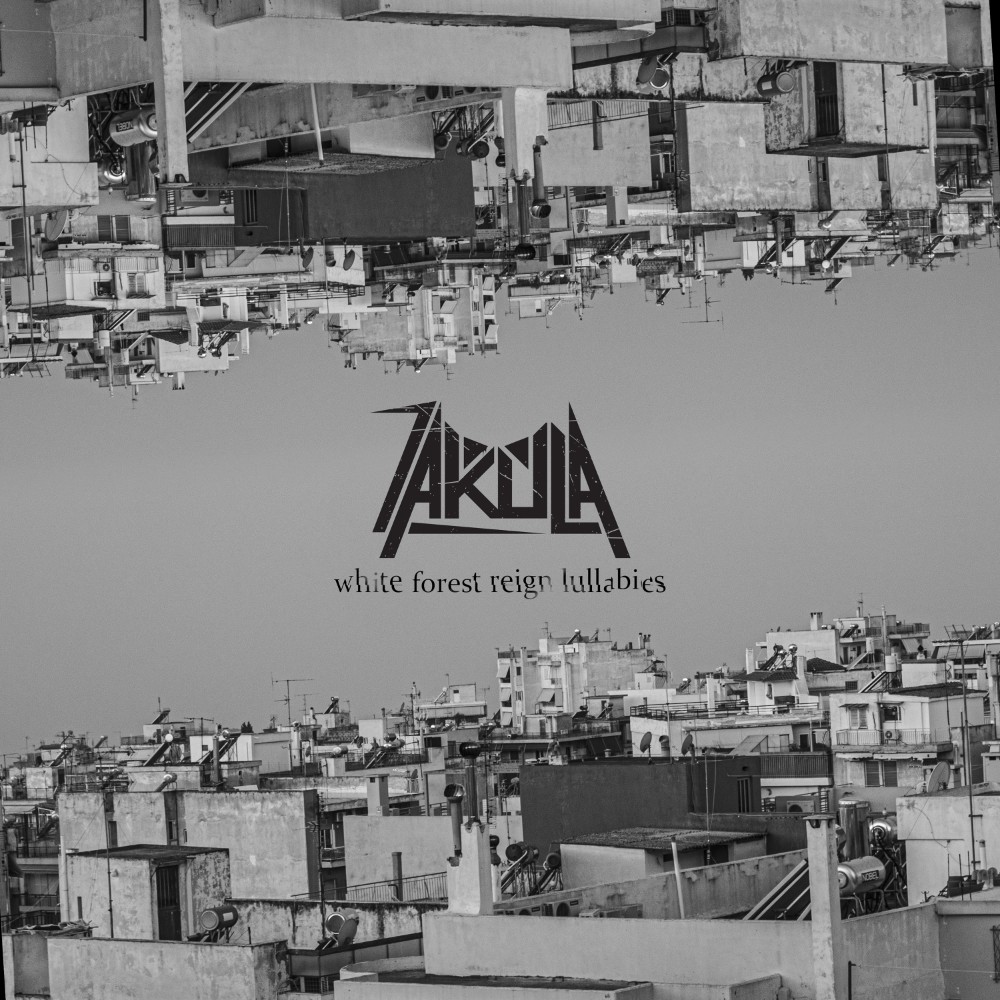
ZAKULA – White Forest Reign Lullabies
- Posted on 15-07-2025
RELEASE YEAR: 2024
BAND URL: https://zakula.bandcamp.com/
In the movie “La La Land”, Keith (John Legend), tells his bandmate and friend, Sebastian Wilder (Ryan Gosling), essentially, that jazz is dying because the latter keeps it too traditional without opening himself for new ideas. How often true of heavy metal, how silly it sometimes sounds in the second decade of the XXI Century, when some of its creators do exactly what Wilder does, insist on staying traditional, refusing to open themselves to new ideas while bemoaning the supposed death of heavy metal. It doesn’t help that some albums don’t stand the test of time, and just to give one example, Machine Head’s Burn My Eyes¹⁹⁹⁴, as fantastic (no, not perfect) as it was at the time, today sounds a bit archaic while already the perfect follow-up The More Things Change¹⁹⁹⁷, still as relevant to these ears as if it were recorded a week ago. Because of that, while I’m thankful for what the 80s and 90s gave us, I don’t think metal can thrive much on antiquity, which is why I always appreciate innovators within the genre who throw caution to the wind and cross the boundaries of subgenres as much as the genre itself into other styles. One of the ones who recently caught my attention is Greek Athens progressive deathrash ensemble Zakula who, having introduced us to their craft with independently released very good Zakula²⁰²¹ debut full length, have just recently followed it with a far more nuanced and adventurous excellent White Forest Reign Lullabies²⁰²⁴, also independently released on October 25th.
Taking cues and influence from the likes of At The Gates, Devin Townsend and Strapping Yound Lad as well as Sepultura, Voivod, Mastodon, Neurosis, Meshuggah, Atheist, latter Death, as well as Between The Buried And Me, among others, Zakula, featuring a stable line up of Paschalis Christofilos (vocals), Simon Kangelaris (guitars), Socos (guitars, production) and Ntinos Xarchakos (drums), create a rich tapestry of progressive melding of styles with skill and efficiency that belies their relatively short, seven year existence, sounding most effective in long tracks full of twists and turns, ebbs and flows with fresh post-metal ideas that are not typical for either death, thrash or progressive metal, all of which which in no way denies their belonging to any of the aforementioned. It feels like the entire album is hanging on three long tracks (to which I am partial, I may add) the excellent title track and the two perfections, “Melancholy” and “Children Of Haze” (be that as they are both in the second, more interesting half of the album) with the remaining three thrashier, simpler yet more technical short cuts a kind of mortar that holds them in place.
Things more than make sense here: the 1, 2 Mastodonic Voivodian thrashers opening the album, “Όλεθρος” and “Remains” serve as kind of a bridge from the self-titled to the Meshuggaic industrial crushing, and, at times, genuinely creepy title track, the first attempt at mixing the thrashier with the slower, doomier and more epic, with symphonic touches and finally erupting into cascading repetive Neurosis, a great memorable riff though it is, weird processed vocals like demonic legion fighting for domination in a hapless black magic dabbler or, more likely, simply played in reverse, noises and industrial like tuning a radio station, ends with computer noises, which is a perfect segue to the first of the two aforementioned perfections, “Melancholy”, which recalls Atheist deathrash or early At The Gates and features banshee vocals a’la Dani Filth of Cradle Of Filth over latter Death, later changes pace into Between The Buried And Me only to give way to frantic technical soloing a’la Ride The Lightening¹⁹⁸⁴ amidst fantastic drum work, while “Children Of Haze” closes the album with hands down the best composition Zakula has on offer, combining reverb black metal with fast Opethian death, Gojiran riffs which allow for epic melodiscism, with that chorus truly a unique construction but the song has that long forgotten, at its time brilliant, hardcorish vibe of Vision Of Disorder’s Imprint¹⁹⁹⁸.
All of the above shows that Zakula is onto something great barely on their second album, something they will soon be able to call their own sound, provided they maintain this level of complexity without losing the hooks and the freshness that spell out both hunger and talent, both traits so often missing from some the older as well as the newer acts.