
ÅRABROT – interview
- Posted on 23-09-2025
All photos by Jonathan Mazin
Interview by Andrea Chirulescu
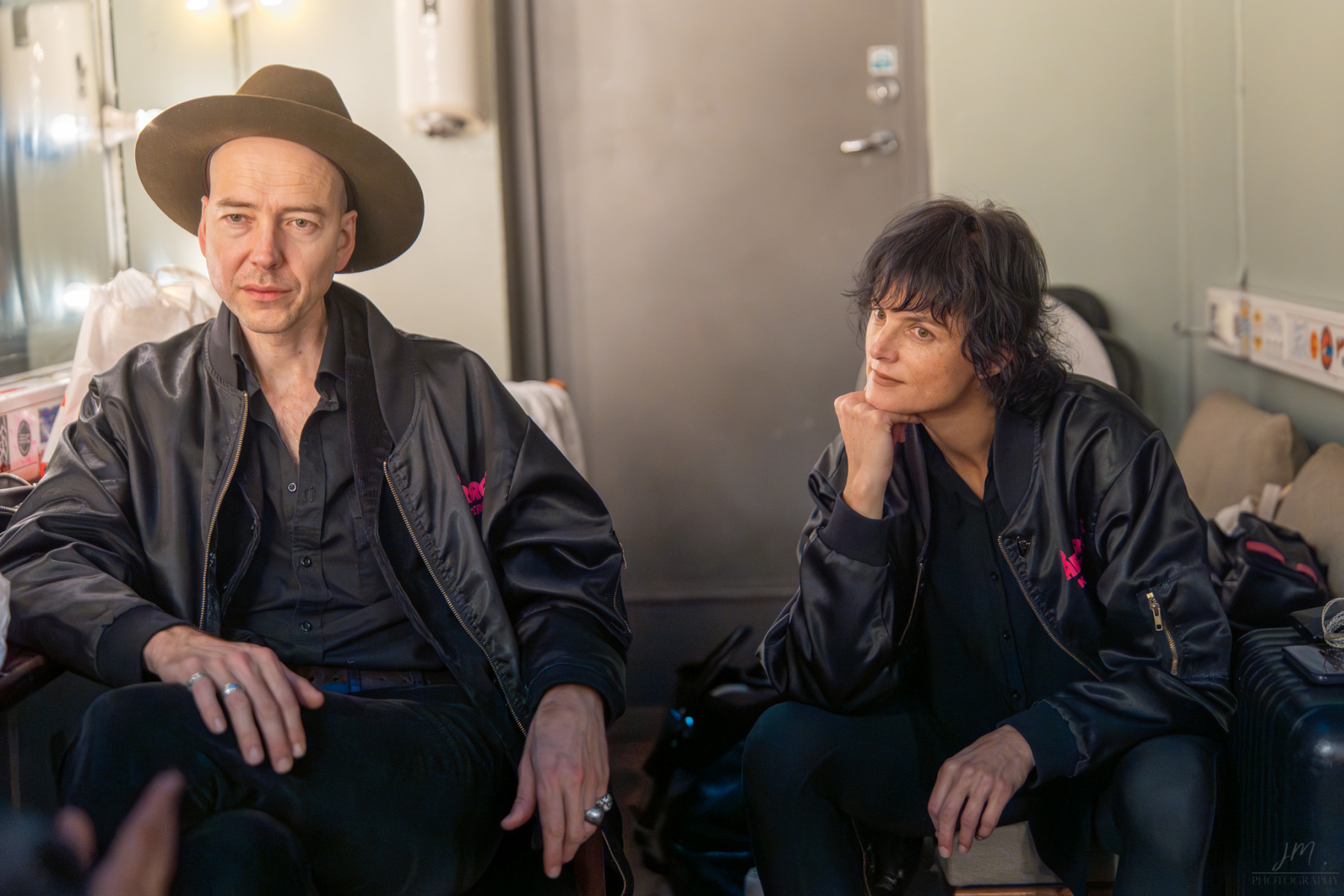
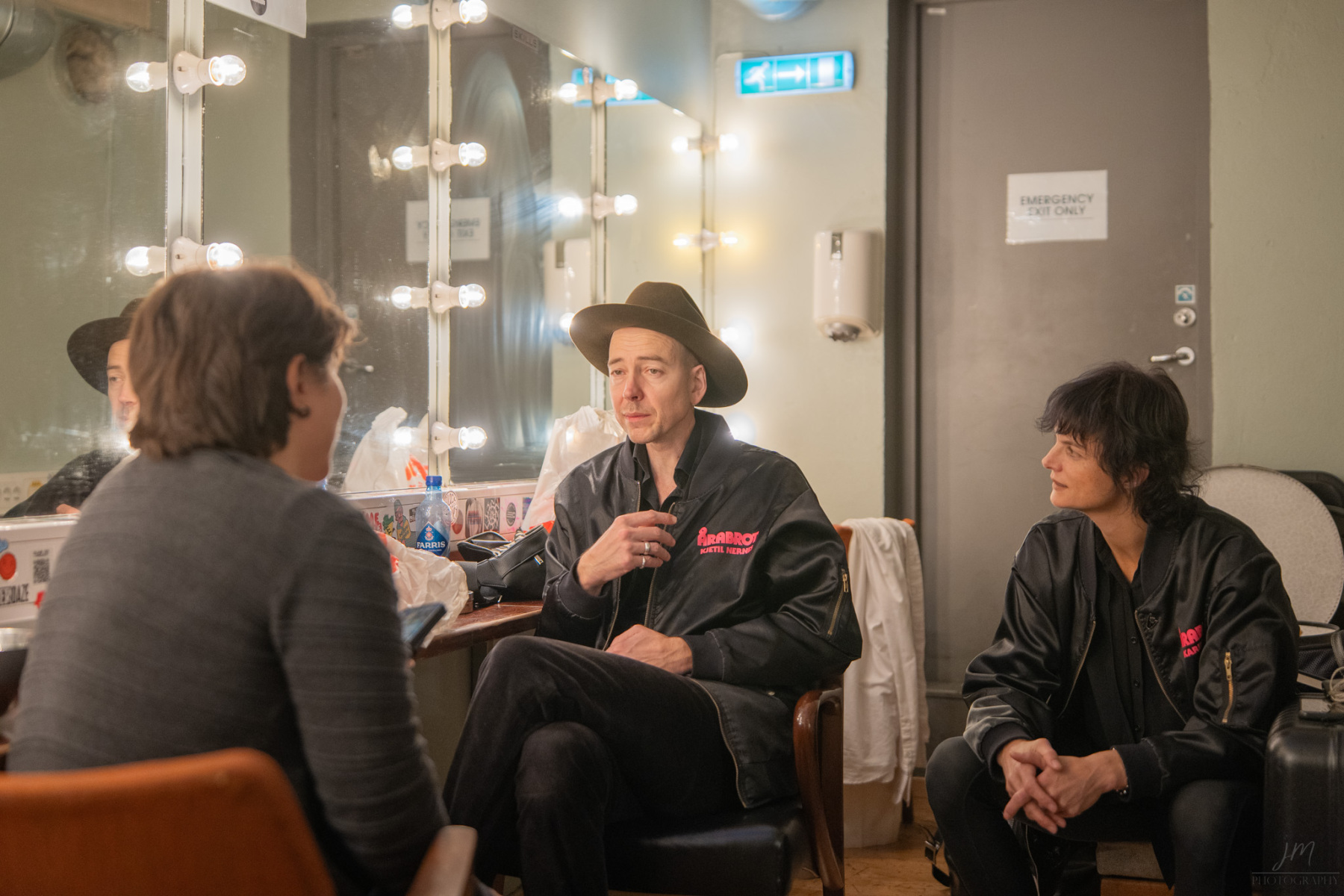
Prior to Årabrot’s show on September 19th, at Parkteatret in Oslo, we had a chance to sit down with Kjetil and Karin and have them talk a bit about their music, outfits, recording process and more. The afternoon was a bit hectic, with delays and constantly buzzing phones, so we only dared to take 15 minutes of their time, which are transcribed below.
The band is on a mini tour in Scandinavia this autumn and two extra Europe dates, so if you have a chance to catch them up at any of the upcoming shows, do yourself a favor and attend it. Good mood guaranteed:
September 25th Kulturhuset, Bergen 
October 4th Stavanger Rockfest
October 9th Blårock, Tromsø
October 11th A38, Budapest 
October 25th Maison des Chæurs, Montpellier 
November 7th Haugaland Progfest, Haugesund
ET: Why Årabrot?
Årabrot: It’s from the city where I’m from. on the West Coast, the garbage dump or the recycling place, whatever they call it these days. It’s called Årabrot. T hat’s the reason why. So we’re naming ourselves after the garbage dump. And I talk about the old style, proper garbage and trash pick up. But now it’s been changed like the one in Oslo and everywhere else, actually
ET: Hehe, so that was really punk
Årabrot: Yeah, exactly. We were actually invited last year to come play at the garbage place, at a party in their new big office building. Who would have thought of that back in the days.
The name has actually caused trouble ever since. Everyone’s like “how do you pronounce it?”
ET: It’s not an English sounding name, so difficult to tackle it abroad.
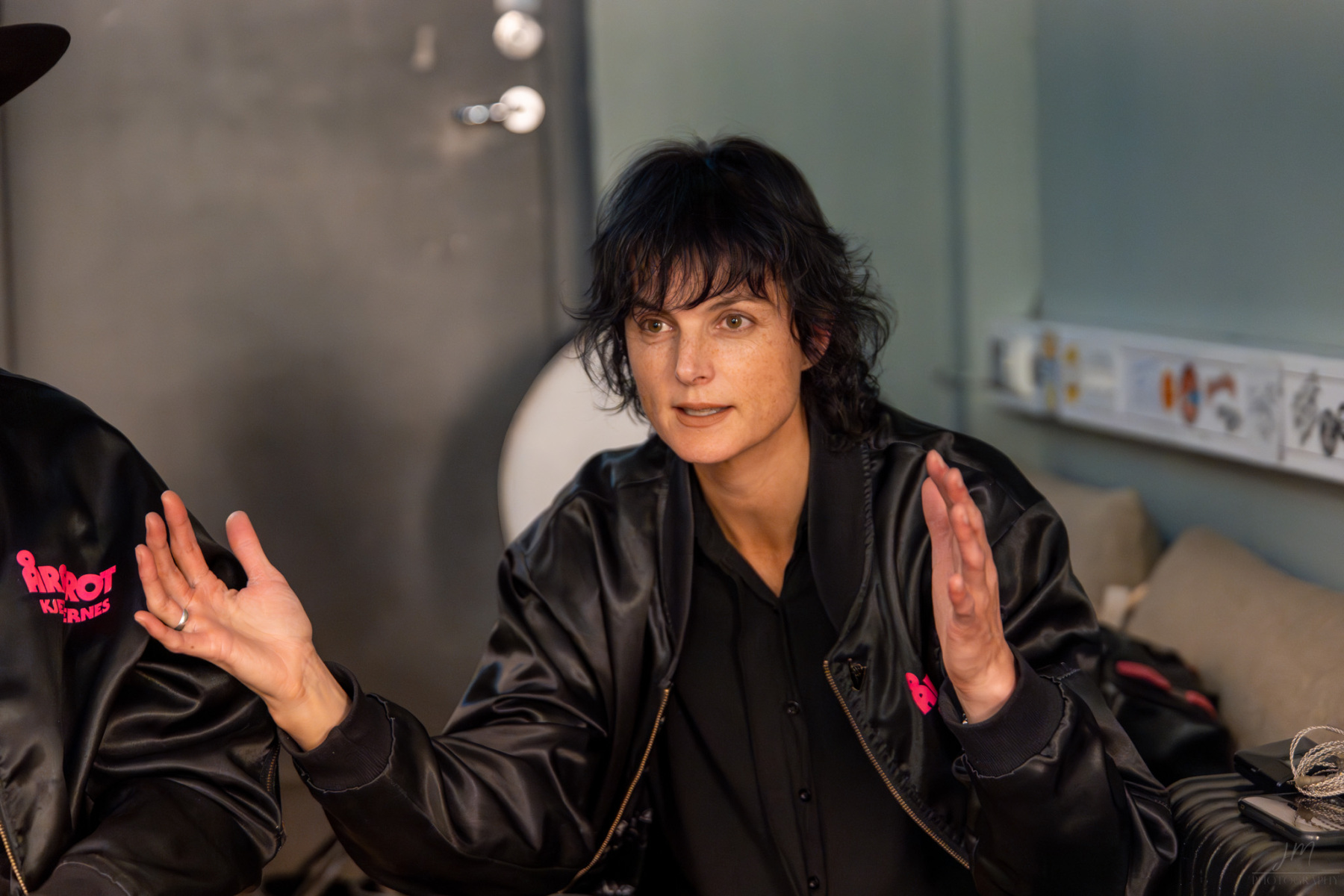
Årabrot: But it’s a bit late to go back now. Now we have these jackets, with our names embroidered, we wear them on tour and then every time. So my name is Kjetil. And if I come to Romania and I say we are Årabrot and I am Kjetil
ET: Yeah, that won’t make much sense there
Årabrot: (Karin) Everyone actually comes close to me and whispers ‘how do you actually pronounce it?’ and points at his name

ET: How can you play – because you say what stage that you play ‘skitten’ or ‘stygg’ rock’n’roll or similar. Which, in my head, I translate as dirty rock’n’roll. But you play that dressed in white. How can you put these two together?
Årabrot: It’s the light and darkness and…
ET: Actually, how do you even keep these clothes alive and white throughout the touring?
Årabrot: It’s our wedding clothes, actually.
ET: Wow.
Årabrot: And the cross that we have on stage is a cross which is on our church, or the place where we live. Since we live in an old church. But the clothes, they’re all vintage and resisted surprisingly well. Karin’s dress, costed like 50 euros or so. And it’s been washed so many times and I fixed a few times as well – with some help from mum. But they are amazing quality clothes.
Because it’s all white and there’s a lot of dirt around these places, thus everything tends to get pretty dirty, we figured out a very good soap – gallesåpe.
Karin: I was once completely covered in blood when I fell from the barricade or well, the fence. There was blood everywhere. Yet, with this soap, we cleaned the dress and you couldn’t see any spots on it.
ET: How does Karin’s presence in the band influence the way the music is composed now?
Årabrot: (Kjetil) When we started, we were like a democratic band. It was me and a couple of other guys, but that changed, becoming more of my project. And obviously then it was just me leading the way. It would be my all my decisions and so on. But now it’s coming back to the democratic style in many ways. Even though I start the process of writing the songs, that would be the basic idea of the songs and then we’ll go from there. We’re much more like a band now, and work together for taking decisions. I can have practical questions if something is practical or any good from a musical perspective or an artistic one in any way, I would go to Karin for discussion.
(Karin) I would say you are a lot more open minded now, than before. Indeed, he writes all the songs, and if he says “I want it like this”, I think earlier it was harder to cut that off.
(Kjetil) So Karin brings some of the light into the darkness
ET: Not the other way around?
Årabrot: Yes, sometimes the other way around.
ET: You recorded this new album in the church completely. How did you learn to? Do you have all the equipment that you need? Tell me a bit about the process of making an album in a church that’s also your house.
Årabrot: Yeah, that’s true. Well, we do have a studio, meaning the second floor is a studio room. And then the church room is a recording space and we live there too. (Karin) We accumulated all the stuff over the years. And I actually taught Kjetil to use the recording program. I’ve been working with it much longer and we have different expertise in the recording area. In the end we’ve just collected all our gear and now we have a working studio.
(Kjetil) Both this record (Rite of Dionysus) and the previous one (Of Darkness and Light) were recorded at the same time and we had our producers coming over. He did a lot of the work as he’s quite phenomenal and has a lot of experience with recording – see stuff like Queens of the Stone Age, for example.

ET: Do you guys create the music for one album when you decide to write an album or you have stuff all over the place and you see whatever comes together? What’s your style?
Årabrot: (Kjetil) Usually I would have a very specific idea about the songs, quite a lot of them. But for this particular album, which turned into two albums, I had like 30 plus songs that came down to about 20 of them split into two albums, “Of Darkness and Light” and “Rite of Dionysus”. But I think that back in the day, before Karin being a proper member, I knew exactly which song would be on the album even before recording them. Now, there are a few wildcards lying around actually, even if the general the idea is still pretty solid before recording.
But you often really don’t know. For example, we were even working on some new stuff and it’s like I build a whole project around one song, with its thematic and everything. But then, as the years go, all of a sudden that song is out, even the starting point goes out. So you never really know to be honest.

ET: How do you pick your drummers? I’ve seen you with many live drummers. The two of you are the permanent members, but drummers seem to change
Årabrot: It’s a process going back and forth. Nowadays there are two who we mainly work with and whom we’ve had for some years. But what happens is related to the availability of many of these drummers. They are, you might know, studio drummers or drummers in other bands and they are quite often busy. So it depends a lot on that.
(Karin) But I would say that first of all they have to be a cool person to be around. I’ve been playing with Ottar before so we knew him to be a good person and has a real understanding of all the music that we’ve been inspired by – since there’s so many
different genres involved. So there’s a certain, I would say, very specific role that we have always been drawn to and a drummer has to understand and like that thing. Given all this, I would say we’re lucky to have two drummers that we can collaborate with.
ET: I can only imagine. The first time I saw you live it was with Tomas Järmyr and he is quite a versatile drummer who can adapt to so many styles. You are not the band who can just have a black metal drummer for example. They need to be able to go all over the place, from jazz to simplest of drumming.
ET: Do you ever feel like redoing any of the old stuff now that you work together with Karin or you only wanted to do new stuff together?
Årabrot: Oh, I personally would only do new stuff, but Karine wants to do some of the older ones. It’s hard to go back to the beginning because to recreate that stuff is really tough. Maybe I’ll consider it at some point, but the old recording is so raw. There’s nothing like almost all bands use nowadays, when they record with a click to make it work in the various programs. But we didn’t have anything this fancy and we had troubles with the overdubbing guitars and stuff that didn’t always make sense. There was always a sense of craziness and the drummer at the time couldn’t keep a steady beat…. it was hard to explain. Redoing all of that stuff with that sort of vibe and feeling, it’s hard to recreate. It just doesn’t make sense.
(Karin) I think that’s a part of the history. I don’t think we should rerecord any of that either. I would love to play some of the old songs, because it’s a lot of different stuff. And I am more nostalgic than Kjetil is. But some songs are really cool.
(Kjetil) So here I’m talking about the very beginning. But later on it became a bit more civilized. What might happen if we try to do those very early ones, is that they would just would lose the spirit. It would be like spaghetti bolognese without any spices. You don’t want to go there. It’s meaningless.
ET: Hehe. I get it. Last question. You guys had the show, which was really special in the Vigeland mausoleum. You are definitely a band that can do special shows since you’re not just another band on the stage. Would you consider more shows like that?
Årabrot: Right now it’s a big focus on the fact that the new record has a specific purpose atmosphere. It’s a specific atmosphere that is needed, history is needed to be told and all of that. So we put our energy into that for now. But we are of course interested in more than the usual live shows, because we have proven that we can. I think it’s part of the DNA. We have done, for example, live film soundtracks. We’ve done experimental show like at Henie Onstad, for example. Because we’ve done all of that stuff, for sure, we’re open for more.
ET: So good to hear. Thank you for your time and have fun at the show tonight.