
ENSLAVED – interview
- Posted on 03-11-2026
Photo by Sonja Schuringa
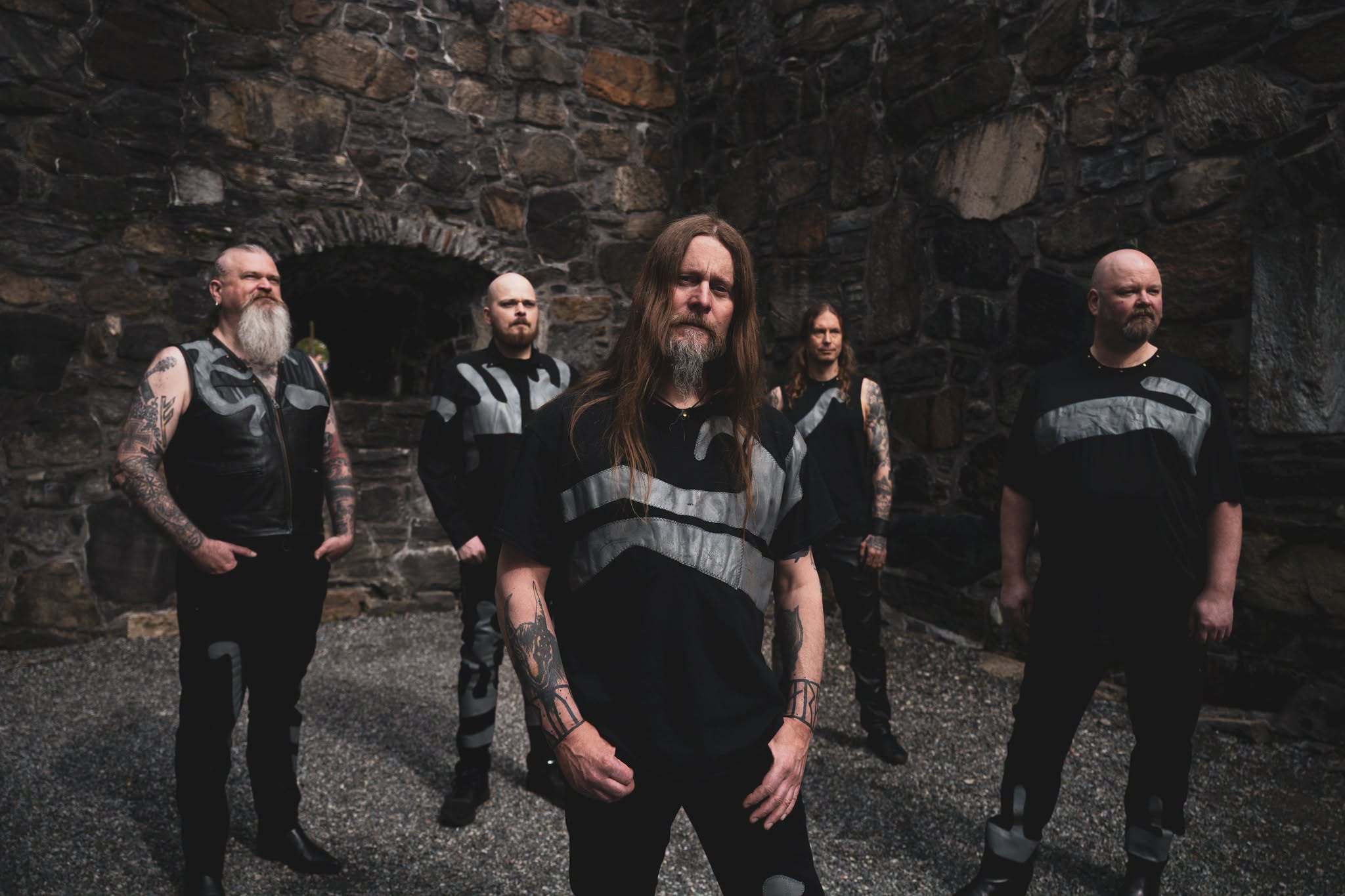
Few days prior to the release of Enslaved’s recent album, Mið, and also a few days prior to their majestic live performance at the unholy Halloween event on October 31st at Oslo Spektrum, we had a chat with Grutle Kjellson, getting to hear a bit about how the album and its unique collaborations came to happen, small details about the recording process and more. As technology didn’t work in the favor of less usual browsers, the recoding option was not available and thus you’re only getting the text version of the transcribed chat below:
Eternal Terror: (after discussing a bit about the pronunciation of Mið) What is the background for where the idea for Mið came from? Was it a musical idea, an experience or?
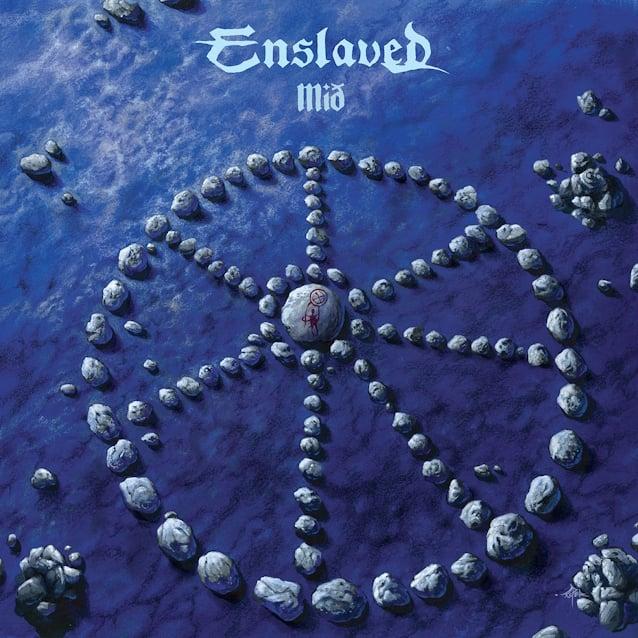
GK: It basically means center. And the center is a theme and a concept that goes through all of history. Everything is concentrated in the center, in the middle of the mind, in the middle of the world and if you think of older monuments from the old timer, the stone age and all other bronze age constructions. Most mythological, sacrificial or religious aspects, everything is centered. In the center, like in the center of the universe. So it’s a kind of a universal concept. You can say maybe it’s like dragging everything back into the center of the mind, a gathering of the forces, the surroundings, the chaos, the dreams and drag them into the center and thus try to understand them. That’s the concept.
As for how it came to be…maybe it came during some time during last summer. Ivar and me started to discuss things around it, what to write about and what to sing about and the artwork and so on. Back-and-forth discussions as usual, and we ended up contacting a friend of ours, an artist called Arik Roper and presented the ideas to him, and he ended up painting it. I think it was ready on the second day or the recordings.
So the music is intentionally written for this. It’s not like you pick together some old pieces of music, that you had laying around?
GK: No, it is intentionally written for this and put together when the idea was ready and when the framework was set.
Do you use the same formula of writing music in 2026 as you did 30 years ago or how does the process work now?
GK: Things have obviously changed a lot. Back in the days we used to work on all the songs on regular rehearsals that were happening regularly, once a week. Nowadays though, we have more opportunities to send back mail each other demos and ideas and work more individually on the structures, than we did back in the days. But we also do rehearsals, of course, but they are more after the recordings than prior to the recordings. So yeah, it’s actually a big difference. We don’t rehearse like we used to, once per week, because everybody has their own life and businesses to take care of now and it’s not as easy anymore. But it does work, that’s the most important thing.
It helps you put together an album, so it must work. I guess you guys still live in the same city so it’s easy to meet.
GK: I live outside of Bergen now, and I live like 2 and a half hours South of Bergen. It’s a bit more of an effort to meet up as the other four guys still live in Bergen
You guys are known, and as a lot of reviews point out, for your songs that are not so easy to predict, as they go in many directions. How easy does that feel for you when putting together a song? Or how much effort is it required to not deviate from what Enslaved sounds like
GK: Enslaved, is a metal band to the core, of course. But when it comes to listen to others’ music, to pick up music or to buy music or to enjoy music, we have never limited ourselves to just 1 or 2 genres. We only see music as either good music or bad music. Yes, we are music lovers, and we are music collectors and we’ll listen to a broad variety of different kinds of music. And obviously the music you make, the music you write is very much colored by the music you are listening to. We had that ethos very, very early that we’re not going to bow for any expectations from others. We always have always tried to make our own favorite music at the time being. Better said, our own contemporary favorite music. So you can hear elements of lots of other styles and we’re totally limitless. We don’t care about that, we’re not conformists, we try to be creative songwriters. I think that’s the main thing that has kept the band going for so many years as you have to somehow make it interesting for yourself to go on and not to try to write generic music to suit some masses or a certain audience
And I think the Enslaved fans appreciate it that way, as music shouldn’t only something you put on for your own comfort. It should also be a bit challenging, both to write and listen to, otherwise it would be very uninteresting and generic, I think.
I agree. Hopefully the fans will agree too.
Tell me a bit about how you ended up with this interesting collaboration of new styles like American Indian Artists, Kevin Kicking Woman and the Sámi joiker artist Johan Sara Jr. What’s the story?
GK: Ivar has been in contact with Kevin for some years now. Last year, we went over to a festival called “Fire in the Mountains” festival and they became friends and it ended up with Kevin who offered what I think they called a morning prayer. I think he wrote it or created it like 10 years ago. He recorded it, in a hotel room in new York I think, and then sent it over to Ivar. Ivar then kinda built the music around Kevin’s morning prayer. The fascinating thing is that Kevin’s voice was in the at the same pitch as the Enslaved tuning, so we didn’t have to change the tuning or anything. That was really interesting. That became a unique piece of music, something that we haven’t done before, but even then you can still hear that it’s enslaved with the riffs and the performance around Kevin’s contribution, I think it’s a really good song. Kevin is also a really kind and interesting guy.
About Johan. I don’t know him, I’ve never met Johan. Iver, our drummer, and studio owner, had Johan recording some stuff some years back. It started when we had already written “Spirit Helper” and I was working on the vocal, the lyrics and the vocal arrangement of “I am Ice” and suddenly, when I listened to the first part, the first riff, I thought that we need a connection there. We need some indigenous material from this side of the Atlantic as well. Joik is a nonlexical style of singing without words. It’s based on feelings, emotion, spirituality. I just felt that “I am Eyes” needed something like that, so I recorded a demo, I did a little joik. Actually, I went up the Karasjok in Finnmark 10 years ago as I was trying to learn joiking from the Sámi people, so I know a little bit about it. I recorded a demo joik and sent it to Iver, who thought it was a good idea. But I didn’t want to use my own joik. I wanted a real Sámi, a genuine arcane joik. I then added a little note, explained the lyrics and sent him the demo, and a couple of days later he sent back his joik, that we added to the song and I think it’s perfect. It’s really suitable for the song and for the album.
It’s one of those things that I was saying a bit earlier: stuff is definitely Enslaved, and then all of a sudden, something new comes as a surprise. Which is really cool.
GK: This is something that happens when you go along when you are in the writing process and you get an idea, you should follow those ideas because it’s an instinct, it’s spontaneous, it’s energy.
I guess it’s a lesson learned after so many years of making music and performing and seeing other artists.
GK: Usually if you you have an idea, if you think it’s a good idea, you should just follow it. Don’t think too much about it, just do it.
And since you’re talking about not thinking about it, I’ll ask you to think a bit in retrospective at the whole album. What is the thing that surprises you the most about the album?
GK: Most surprising thing is that we were able to do it that fast because we didn’t have much ready before we went into the studio. We had like 2 or 3 songs ready and the rest something in the lines of Iver was recording the drums, while Ivar was sitting in the neighbor room, writing the next song, making the next demo ready and putting the songs together. “Here’s a new one, record the drums”. They sent the demo to me and asked “Do you have some lyrics for this?” I did my best and I wrote the lyrics. Just like that, except one of the songs I did “I am Ice” beforehand and the rest was done in the process. Ivar wrote music, and I put together the lyrics and Iver was recording the drums. And the next week I went up, we made the vocal arrangements, 10 minutes later, we recorded the vocals. But this was fun. It was really refreshing to do it this way. As Ivar put it, it was like stepping into a pressure cooker, and just let it go.
The level of self-confidence kind of grew as we went along. After a couple of days, it became very enjoyable instead of stressful. It is stil fascinating that we were able to do it. I guess we have some experience that made the difference. I don’t think we could have pulled this off when we were in our 20s.
I was thinking to ask that, but you just brought it up, related to your long experience: do you guys experiment with recording equipment technologies anymore, or are you just have your favorite ways of recording? And that’s all you’ve been using.
GK: Iver, our drummer/backing vocalist, he has his own studio so obviously he’s a microphone geek, he’s a compressor geek. Of course, all of us are interested in amplifiers, guitars, basses, keys, stuff like that. I don’t think we are super nerds, and it’s not like we talk about it all the time, but all in all, we are deeply interested in gear.
And do you think you modernize your gear with every album or you stick with the old-fashioned stuff?
GK: From my own part for the last 3 albums, or 4 albums, I’ve been using the same gear. Same amps, same bass guitar. From time to time I bring other bass guitar, for some specific parts of the songs stuff. But In general, it’s performed with the same instruments and with the same setup. But we are always open for experimentation and we have done that throughout the years.
This one is your 17th album in 35 years. When it comes to playing live, how do you choose songs to be performed on stage? Given that you have so many albums and such long songs?
GK: Well, that’s not that tricky. However, when we put out a new album, I think it’s a little bit tricky, because we haven’t performed any of the songs live, and we don’t know how they will work out live with the audience. But apart from that, after performing certain songs, you realize which songs have the best audience, which ones feels right to play them as a band. You always stick with a couple of favorites from each album. Our audience seems to enjoy mostly a couple of hours from the start, a couple of albums in the middle and people are always eager to listen to the most recent thing you are doing. But we do have our own “Ace of Spades”, so to say, kind of songs, that tyou always have to perform and they became classics for our audience.
Sometimes people bring up songs that we’ve forgotten about and they ask us “why aren’t you playing that song live, that was great and everybody loved it?” The answer is that we simply forgot. And then we might bring it back to our live setlist, which seem to make people happy. During the pandemic, we had an online show, a fan voted kind of show, where the fans voted for the setlist. Surprisingly enough, a lot of the songs were songs that we regularly play live. But there were still a couple of surprises with some of our very long songs. But I think at least 50% were regular songs.
You performed at countless venues in your life. Is there one place place that you’d go back to tomorrow, even if you lose a lot of money? Is there a place that’s very dear to you, that you would always play at?
GK: There are a couple of cities that are special to us, indeed. In the United States, I love to play Chicago. There was the first ever show that we performed in the US. We have a lots of friends there. Same with London really, always good shows. It really doesn’t matter if it’s a festival, or if it’s a small venue, as long as the as long as the symbiosis between the band and the audience is great, we can perform well wherever.
Still time still time you’ll never know you guys have received quite some recognition. And, I guess, you’re no longer quite the underground band because you have won some Norwegian music awards, even non metal people might have heard your name. How do you feel about that? Has that changed how you approach your work, your creative process?
GK: You mentioned that people outside the metal world can enjoy Enslaved and heard about Enslaved, and that’s a good thing, because sometimes we play Jazz festivals and Prog Rock festivals for a totally different audience. Which is both unusual and refreshing at the same time. That is an obvious change, as we didn’t play a lot of jazz first of all, since 95. It is nice to have a broader audience.
Another thing that you might have noticed or talked about, is how the extreme metal music has changed since you guys entered the scene in 90s, and now you have a lot of younger musicians that have access to way more music than you guys did when you were young, and tools and all that. Is there something that you find interesting and you admire about the current generation? And what do you think the current generation might be missing about the early days?
GK: We definitely had a different ownership to music back in the days, because, as you said, not everything was available. There was no internet, so If you were picking up new music, especially underground music, you had to write a letter to someone in, let’s say, Singapore or Malaysia or Hungary or Canada. And wait for like one and a half months to get that demo tape. And of course, you’d listen to that demo tape into pieces before you made your own mind, instead of watching 30 seconds TikTok videos. So that’s a big difference I see. That’s a real big difference. So Verse. There’s a pros and cons with everything I believe. As nowadays it’s more cherrypicking. In the old days, we had to put more effort into things, both recording and listening and reading about things. Everything wasn’t as available. Maybe it was more magical. It cannot be that magical today.
You had to digest it, and you said until the next tape came into the mail, it took so long, so you had no other choice but to listen to the 2 tapes that you had, you had no other options.
GK: Exactly. That was a nice thing, you really dug into the music, you dug into the core of things, more than people do nowadays. So that’s a sad thing about how things changed.
You just have to go with it I guess. There’s another thing that I’m wondering about: how your understanding of Norse mythology changed for you over the years? You’ve spent so many years singing about it, and I know that in your private lives, you guys are also interested in a lot of activities related to different viking themes.
GK: The mythology, you can say it has become a part of our life. The way we are thinking, we can always find parallels in the myths. And thus it impacts our understanding of the initial meaning of those scripts, more than we did when we started the band.
Do you feel like your understanding of it has changed a lot, you see things differently related to how you saw mythology when you were in your 20s?
GK: Absolutely. When you are young, before you dig deeply into it and before it becomes part of your life, you just see them as stories. But, throughout the years, you read the same stories with new glasses. And that really opens up bigger landscapes. I think that’s a cliche, but you read things in a different pace when you are getting older and more experienced. I think a little more on each sentence, on every word itself. I don’t move that fast any longer. Even with today’s technology. I think that’s one of the beneficial things with getting older. Perhaps you get wiser. But you definitely understand more.
It’s an interesting thing with historians nowadays. They have tools that makes their interpretation much easier as they can lean on modern archeology, for instance, in a totally different way that they could 50 years ago. Or even 10 years ago. They now have isotopic analysis of materials, genealogy and such. They now have more pieces of the same puzzles.
And they can make or break the stories now. However, the technology that I am using now will soon end the meeting, so I thank you very much for your time and looking forward to watching Enslaved live on 31st of October in Oslo.