
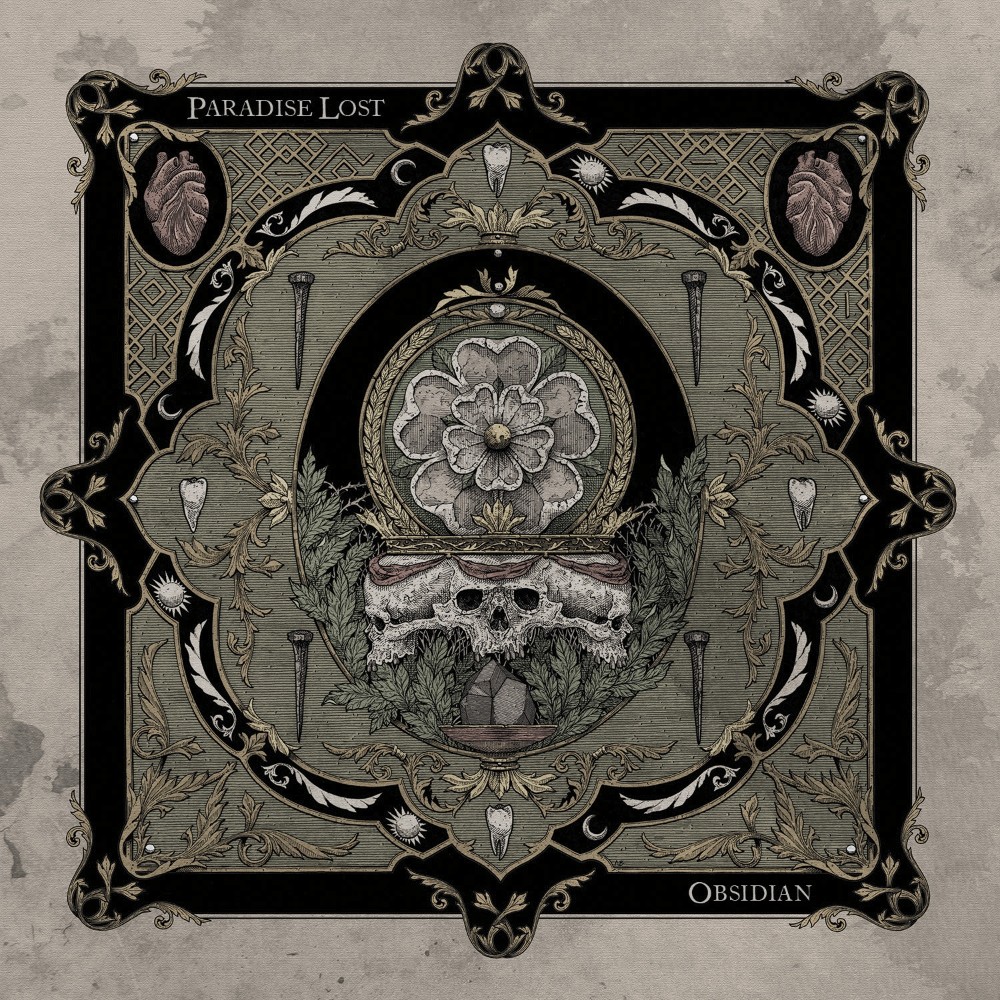
PARADISE LOST – Obsidian
- Posted on 30-05-2020
Paradise Lost, which always included Nicholas John Arthur Holmes (vocals), Gregor Mackintosh (lead guitar), Aaron Aedy (rhythm guitar) and Stephen Edmondson (bass) but frequently rotated drummers, quickly moved through "Morbid Existence", eponymous and "Frozen Illusion" (1989) demos, initially making little impact with their debut LP, "Lost Paradise" (1990), yet with the excellent "Gothic" (1991), they simultaneously paved a way for countless doom/death and gothic bands. A member of the so called Peaceville Trinity (after the Peaceville label) , along with Anathema and My Dying Bride, while their labelmates continued on for a while horizontally within the genre, the Halifax, England quintet, began to just as quickly depart from what they’ve made, and while the excellent "Shades Of God" (1992), the phenomenal "Icon" (1993, my point of entry into their catalogue) and the excellent "Draconian Times" (1995) still bore much of their signature sound, they began to shed the metal armor on the more synth/pop gothic rock/metal "One Second" (1997), finally abandoning it altogether for Depeche Mode-ian synth/pop of "Host" (1999). Mackintosh openly expressed his fascination with Depeche Mode (signs were already on "Draconian Times" for a discerning ear), especially "Songs Of Faith And Devotion" (1993), the biggest influence on "One Second" and "Host" so it was only a matter of time until Paradise Lost went that way, eventually Greg turning into a type of Martin Lee Gore (to match Nick’s David "Gahan" Callcott) for a Depeche Mode-like image Paradise Lost maintained from the music to clean-cut member looks. Then, as they moved through alternative rock (Believe In Nothing, 2001), industrial/punk gothic (Symbol Of Life, 2002) and heavy rock (eponymous, 2005), Paradise Lost begun to wane in inspiration, flashing occasional brilliance here and there for a consistent disappointment in quality.
The Paradise was regained with the excellent "In Requiem" (2007) where Nick returned to his growls to compliment his ever improving cleans. The excellent "Faith Divides Us – Death Unites Us" (2009) and "Tragic Idol" (2012) both brought back the signature guitar leads, the death/doom heaviness and excellent songwriting, but it was Greg’s tenure in his death/crust project Vallenfyre (where he did commendable growls of his own) which really darkened "The Plague Within" (2015) and "Medusa" (2017) (with even some black metal overtones!), the latter recalling "Lost Paradise/Gothic" days likely due to Nick’s joining the death metal ensemble Bloodbath as its new vocalist after Lars Mikael Åkerfeldt’s departure (to focus entirely on nu Opeth), with which Nick recorded "Grand Morbid Funeral" (2014). Meanwhile Nick’s growls grew even more devastating having accrued over 30 years of pent up emotions only partially relieved by his cleans. Thus Paradise Lost came full circle back to where it had all begun. At this point bands would either start down a new path, disband or make a summary album.
With "Obsidian" (released on May 15th) Paradise Lost clearly took that last option for it is truly an album which sums up almost every aspect of their multifaceted career. The Brits had created so many different styles and sounds with both instruments and vocals it is like a palette from which they can now mix and match colors as they please. Take just Nick’s vocals. He can growl very deeply and painfully like on "Gothic" or just a tone cleaner as he did on "Shades Of God". He can shout, as on "Icon" and "Draconian Times" or he can clean croon as on "One Second" and "Host". Or he can mix it all up as on "In Requiem" or "Faith Divides Us, Death Unites Us". He can do it all! Similarly Greg and Aaron can lay down heavy thick oppressive doom/death riffs or delicate melodic textures, but he should definitely and always lay down his renowned LEADS which made "Icon", "Draconian Times", "Faith…" or "Tragic Idol" the delight they were. To put it succinctly (although the same could be said for Nick, Aaron and Stephen) – there IS no Paradise Lost without Gregor Mackintosh!
Yet it is as if THAT Mackintosh had disappeared on "Host" to timidly reappear no sooner than on the eponymous, 6 years later. This is why I immediately noticed the diminished presence of Greg’s signature leads on "Medusa" – his guitar mostly aping Aaron’s rhythm and filling in despite a decidedly doom/death style circa 90/91. In contrast, on their 16th album, Greg Mackintosh and Aaron Aedy do exactly what I hoped they would do, pick up right where they left off after "Draconian Times", as if they had rolled back those 25 years. As much as I loved "Faith Divides Us – Death Unites Us" and "Tragic Idol" they both merely teased with that direction, whereas the spirit of "Icon" and "Draconian Times" is present all over "Obsidian". Of course, they are not just mindlessly copying their old songs note for note so the opener, the fantastic "Darker Thoughts" (have you seen the video?) has a "Faith…" and "One Second" feel to it, well, at least for the first 1:45 minutes where Nick’s opening calm cleans of restrained fury are so heartbreaking they’re barely recognizable at first, supported just by delicate acoustic streaming and tasty strings somewhat reminiscent of "Enchantment" (Draconian Times). Then the song erupts into a crescendo of crushing doomy guitars and growls with some of the best lyrics in Nick’s career, such as the play on words "God asks not to kill/Godless sworn to kill/God asks not" showing, presumably, an internal moral struggle, and then THAT Greg brings back that paradisical magic with fills and excellent solo for not just one of the best tracks on this album, but one of their best tracks, period. And Greg’s just warming up.
The first video single, "Fall From Grace" is a true lead fest, somewhere between "Honesty In Death" and "Crucify" (Tragic Idol), but it could easily be on "Icon", with growly verses and clean/growly chorus and with yet another poignant lyric "would the eyes of another god decide to end your life?", all a brilliant set up for my favorite track, a kind of "Say Just Words" (One Second) meets "I See Your Face" (Draconian Times) with a faster beat, where Nick sings like Sister Of Mercy’s Andrew William Harvey "Eldritch" Taylor or Type O’Negative’s Peter "O’Steele" Ratajczyk. The cut is actually my favorite on the record for two reasons: it is instantly as catchy as COVID-19 virus (too soon?) and it concerns my favorite person in history. It’s quite interesting to hear Nick chant "for Jesus Christ" as if "Ghosts" were some Christian metal anthem, until one learns from the lyrics that it’s about Nick’s resistance to Christian proselytizing similarly to Philip Hansen Anselmo’s to the same on "Hard Lines And Sunken Cheeks", except Nick DOES talk to friends of God sometimes (Wreck on "Host"). In any case, it feels like 1995 again and Paradise Lost is not just great, anymore, but fantastic, again.
"The Devil Embraced" lyrically shows that Nick has a sane moral perspective on "foolish trust, in reverent pain, foolish trust, The Devil embraced" as Paradise Lost had always dwelt somewhere between the plus and negative. Musically, the track is a fantastic throwback to "Joys Of Emptiness" and "True Belief" (Icon) with growled chorus and clean verses a’la "Last Regret" (Faith…), with such crushing power I’m glad I just bought JBL headphones the other day. Sometimes Paradise Lost gets so deathly they approach melodeath and, while on "Tragic Idol" they only flirted with the genre, here they actually sound like Dark Tranquillity somewhere between "Haven" and "Damage Done" on the explosive, supermelodic "Serenity" one of the flashiest display of Greg/Aaron guitar prowess. Echoing Dark Tranquillity, this time from "Her Silent Language" (which sounded like Paradise Lost to begin with) is the guitar melody in the middle of "Ending Days", a fantastic track similar somewhat to "Darker Thoughts", perhaps its counterpart, with an extremely catchy chorus that will get stuck in your head all day and lyrics about how we don’t appreciate life until we face death, for, again, one of the best tracks Paradise Lost had ever penned. The same is true for the album closer which has a more "Medusa" feel to it, but with leads and melody a plenty, the curiously named "Ravenghast" – an excellent death almost funeral doom fest recalling My Dying Bride for the abundant strings and melody, turned faster like "Requiem" (In Requiem) or "Through The Darkness" (Tragic Idol) before its, again, funeral, conclusion.
Besides serving to reassure me that Greg has no intention to fully embrace his inner Gore anymore than Nick his inner Gahan, "Obsidian" is one of the best albums in Paradise Lost’s history, one you can easily put right next to "Icon" or "Draconian Times" on your shelf. It gets 5.5/6 instead of 6 for two reasons, which are related. First, 9 tracks is definitely not enough, and second, the two bonuses, "Hear The Night" and "Defiler" are both fantastic and both would fit "Obsidian" so why aren’t they part of it? Had they been included you’d be looking at a perfect score.
I highly recommend "Obsidian" to fans of old and new Paradise Lost but definitely lovers of pre-One Second era, because (did I mention that?) there’s still plenty of "Gothic" and "Shades Of God" moments for the hungry ear which had waited for 25 years to be filled with the "Sweetness" again. Hail Paradise Lost!