

GÍSLI GUNNARSSON – Releases A Haunting Tribute to Old Spirits Lost in Iceland’s Volcanic Upheaval
- Posted on 12-10-2025
Hailing from the atmospheric landscapes of Iceland, Gísli Gunnarsson is a visionary composer and multi-instrumentalist whose work blurs genre boundaries—merging cinematic modern classical with the raw intensity of post-rock, black metal, and shoegaze.
It was the volcanic eruptions in his hometown of Grindavík that left the deepest mark on his new album ‘Úr Öskunni’. The forced evacuation, the destruction of his home, and the psychological aftermath of months of earthquakes and instability became the canvas of the new full-length. Music, during this time, became more than expression—it became refuge.
Whether confronting grief or escaping it, Gísli Gunnarsson crafts sonic experiences that serve as a diary—never explicitly literal, but always deeply felt. This approach became central to his latest body of work, shaped by profound personal upheaval.
“Heima”, was written shortly after Gísli was forced to relocate to a remote summerhouse provided by the Red Cross.
“Isolation and trauma were starting to set in. The message and emotions behind the song are simply the grief and yearning for home,” he explains.
A quiet elegy to familiarity, “Heima” evokes the grief and disorientation of losing a lifelong anchor point—place, identity, and safety.
Offering a more hopeful tone, “Glókolla”, is named after a term of endearment for bright-haired children, it was inspired by the overwhelming support Gísli received from loved ones and the broader Icelandic community.
“My girlfriend at the time was the initial spark for this song. I had been calling her Glókolla because of her blonde hair—it’s a word we often use fondly. But it became something much bigger. Iceland really came together to support the people of Grindavík, and this song reflects that collective love.”
“Andlitin í Berginu” (The Faces in the Rock), dives deep into Icelandic folklore.
“Like many Icelanders, I see trolls in the lava fields. There were two trolls in particular on top of Þorbjörn, a mountain near Grindavík. I called them the King and the Servant. I grew up hiking there and loved them.”
Both formations collapsed during the earthquakes, a loss Gísli processed through music. The track imagines the world from their ancient gaze—stoic witnesses to the land’s shifting fury, now silenced. The song imagines the world through their eyes—ancient witnesses to natural upheaval, now silenced.
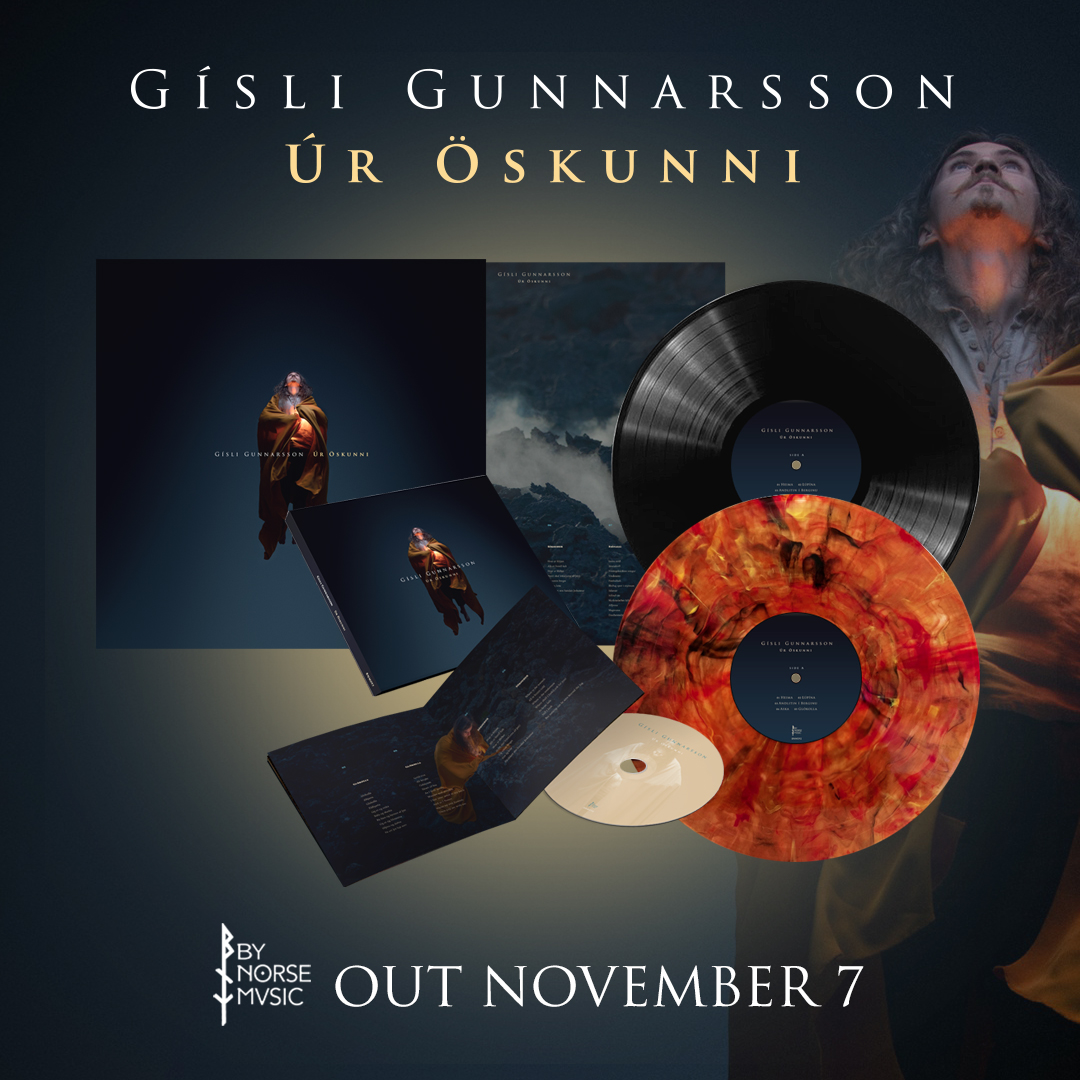
With ‘Úr Öskunni’, Gísli also shifts his approach to music as a solo composer whereas he has previously become known for his collaborative works. In 2023, the artist released the collaborative album Mementos, a series of emotionally resonant musical snapshots that earned acclaim for their depth and intimacy. Featuring contributions from Georg Holm (Sigur Rós), Mat McNerney (Hexvessel, Grave Pleasures), and Laufey Soffía (Kælan Mikla), the album was named to Bandcamp’s New & Notable list.
Following Mementos, Gísli collaborated with one of his formative influences—Alcest. Their joint 2024 single, “Wings of Glass”, featured Neige and Winterhalter, paving the way for Gísli’s contributions to Alcest’s Les Chants de l’Aurore, where he provided choral vocals, arrangements, and production elements.
Whether collaborating with revered artists or composing in solitude amid volcanic trauma, Gísli Gunnarsson’s music is shaped by landscape, loss, and love—an evolving reflection of the forces, both natural and emotional, that continue to define him.